Brand Color Psychology: How to Choose Brand Colors
The baseline assumption governing commercial design is that specific colors trigger universal, predictable human emotions. Designers will tell you that blue automatically builds trust, green naturally heals, and yellow unconditionally sparks happiness.
This framework is completely false.
Color psychology is not an esoteric map of human emotion. It is an economic asset class built on spatial contrast, competitive isolation, and sensory memory.
When a business selects a corporate palette based on generic emotional templates, it guarantees market invisibility. If every commercial litigation firm in Dallas chooses navy blue to signal corporate stability, navy blue ceases to represent stability. Instead, it becomes the baseline cost of entry into the category. The color stops working as a brand identifier and begins working as a cloaking device for your competition.
To build long-term market share, business owners must treat color selection as a calculated violation of industry norms. The goal is not to match your competitor’s aesthetic energy. The goal is to isolate your company from all alternatives in the local market.
Understanding brand identity requires moving past aesthetic feelings and looking directly at cognitive mechanisms. Brands do not grow by fitting in. They grow by establishing distinct visual properties that consumers can instantly recall during purchase decisions.
What Is Brand Color Psychology?
Brand color psychology is the strategic evaluation of how visual contrast and consistent color application establish distinct corporate identities, accelerating consumer recall and long-term market differentiation.

Key Components:
- Category Contextualization: Analyzing the dominant color choices of local competitors to map the baseline industry landscape before selecting a primary brand identifier.
- The Isolation Effect: Deploying highly contrasting color elements to ensure specific marketing materials, buttons, or identity pieces draw immediate consumer attention.
- Chromatic Repetition: Utilizing the exact same color specifications across every digital and physical touchpoint to construct a durable, easily recalled mental asset.
Brand color psychology evaluates how strategic visual contrast and consistent color application establish distinct corporate identities, accelerating consumer recall and long-term market differentiation.
The Core Mechanics of Semantic Color Processing
Color is the very first sensory input the human brain registers when encountering an identity asset. According to a study on the impact of color in marketing published in the academic journal Management Decision, up to 90% of snap judgments made about products are based on color alone.
This cognitive processing occurs long before a consumer reads your company name, scans your headline, or processes your unique selling proposition.
Human Brain Encounters Brand
Color is Processed by the Visual Cortex
Competitor Palette
Matches Industry ExpectationsBrain Filters It Out
Result: Total Invisibility
Distinctive Palette
Violates Category ExpectationsTriggers Cognitive Stop Loss
Result: 80% Recall Boost
What Is the Economic Value of the Von Restorff Effect?
The Von Restorff Effect, also known as the isolation effect, states that when multiple identical items are presented, the item that differs from the rest is the most likely to be remembered. This is not an aesthetic preference; it is an evolutionary survival mechanism.
In a digital marketing environment, this principle dictates conversions. HubSpot, the inbound marketing platform provider, published an A/B test analyzing call-to-action button color behavior. While changing the button from green to red did not alter the text or page design, the red button outperformed the green button by 21%. The red button did not win because red possesses magical psychological conversion properties. It won because the primary page template used green accents, meaning the red button created an instant visual violation of the local environment.
Chromatic distinction acts as a cognitive pattern interrupter in saturated regional marketplaces. When an enterprise isolates its visual identity from surrounding category norms, it forces the consumer’s brain to stop passive scanning, thereby directly reducing the capital required to build permanent corporate recognition equity.
The Industry Alignment Myth
The single most destructive piece of creative advice handed to modern business owners is that your color selection must match the psychological expectations of your business category. This outdated philosophy claims that if you run a medical clinic you must use teal, or if you launch an organic food line you must use forest green.
While this logic seems safe, it ignores how human memory functions. The Ehrenberg-Bass Institute for Marketing Science has proved through decades of empirical market research that distinctive brand assets are the primary drivers of long-term commercial growth. Matching your category’s color conventions means you are actively building your competitors’ mental availability.
Consumer Sees One Blur
Consumer Sees One Leader
Consider the historical precedent established by Apple Computer with the launch of the iMac G3 in 1998. At that time, the personal computer industry was locked in a rigid aesthetic paradigm of beige and gray utility boxes. Had Jony Ive followed conventional industry alignment advice, Apple would have released another charcoal tower to signal technological compliance.
Instead, Apple introduced translucent “Bondi Blue” and subsequent fruit-themed color profiles. This deliberate violation of category expectations single-handedly pulled Apple back from imminent financial bankruptcy by shifting personal computers from sterile office utilities into expressive consumer lifestyle statements.
The exception to this rule is biological contamination processing. In 2000, the H.J. Heinz Company launched “Ez Squirt” ketchup in anomalous shades, such as purple and green. While the product achieved short-term novelty sales among children, the line was permanently discontinued in 2006. It failed because it crossed the line from category distinction into the violation of deep-seated biological markers. Human evolution has hardwired the brain to associate neon purple and strange greens with spoilage, rot, and poison.
Therefore, the rule of thumb is clear: violate competitive category conventions completely, but never violate primary biological survival baselines.
Aligning brand colors with industry conventions creates structural invisibility that subsidizes market leaders. True psychological color strategy requires executing a calculated category violation that forces instant differentiation while respecting foundational biological human survival indicators.
The Strategic Color Architecture Blueprint
Step 1: Mapping the Regional Category Matrix
Before opening a single color palette tool, you must execute a comprehensive visual audit of your immediate geographic and digital competitors. Create a spreadsheet listing every direct competitor within your service radius and extract their primary corporate color codes.
If you are building a professional service company in Dallas and discover that 70% of local operators rely on a combination of navy blue and corporate gray, those colors are officially off-limits. You must look for empty spaces on the color wheel where you can establish clear real estate.
Step 2: Selecting the Distinction Anchor
Your primary color is your brand’s anchor asset. This shade must carry your visual identity across trucks, web headers, invoices, and digital ad banners. It must be selected based on its distance from your primary competitor’s anchor. If your largest competitor uses a bright, high-saturation red, your anchor should land on a deep violet or a sharp, electric orange. Do not look for colors that complement your competitor’s marketing materials; look for colors that make their entire physical presence look dated. Adhering to core logo design principles ensures this anchor functions properly at any scale.
Competitor A
High Saturation
Competitor B
Corporate Navy
Competitor C
Eco-Classic
Category
Baseline
Your Anchor Asset
Step 3: Determining the Functional Accent Strategy
The secondary color in your architecture exists to perform specific user-experience jobs. It should not be a subtle variation of your primary color. It must be an absolute contrast agent that sits directly opposite your anchor on the color wheel.
This accent color is reserved exclusively for conversion elements, notifications, and critical calls-to-action. If your primary corporate anchor is a rich forest green, your accent color should be a vibrant coral. Never use your accent color for background patterns or decorative lines; if you use it everywhere, it loses its power to guide the eye.
1. Extract Local Competitor Palettes:Phase 1: Market Mapping.
Audit the top ten Google Maps and organic search competitors in your regional vertical. Catalog their exact primary color specifications to locate the point of maximum market saturation.
2. Establish the Chromatic Contrast Anchor:Phase 2: Core Selection.
Choose a primary brand color that sits in the least occupied quadrant of the regional category map. This color serves as your primary distinctiveness asset.
3. Isolate the Conversion Accent Color:Phase 3: UX Architecture.
Identify a high-contrast complementary tone to serve exclusively as your conversion driver. Reserve this shade solely for revenue-generating touchpoints, such as website CTA buttons.
4. Execute Gamut Verification Testing:Phase 4: Technical Review.
Test the selected color codes across both digital RGB screens and physical CMYK print runs to prevent muddy color shifts on physical marketing assets.
State of Brand Color Strategy in 2026
The widespread adoption of generative artificial intelligence design ecosystems has fundamentally altered how amateur businesses pick their visual branding assets. Platforms like Canva’s Dream Lab image generator, which scaled aggressively through late 2024 and 2025, allow small business owners to spin up full brand identity kits in fractions of a second based on simple text prompts.
Because these AI engines are trained on massive historical datasets of existing corporate websites, they consistently output the average aesthetic expectation of any given industry. When an amateur entrepreneur prompts an AI tool to create a logo for a green tech startup, the system predictably generates variations of soft sage greens and clean minimalist blues.
Soft Mint Greens & Corporate Slate Blues
The algorithmic average. Immediate category invisibility.
Intentional Chromatic Dissonance
Human-engineered variance designed to shock the visual cortex.
This automated design loop has created an unprecedented phenomenon called “AI visual homogenization.” Saturated local service markets are now flooded with thousands of new businesses using virtually identical, algorithmically generated color palettes.
For the discerning Dallas business owner, this shifts color strategy into an incredibly lucrative opportunity. When your entire competitive landscape relies on automated AI sameness, executing a human-driven, contrarian color strategy instantly breaks the pattern.
Furthermore, search engine evaluation systems are actively adapting to prioritize deep informational variance. Google’s Helpful Content guidelines heavily reward unique brand properties that do not simply mirror the existing web ecosystem. Distinctive color application across custom brand assets acts as a clear signal of human-curated authority to both search engine crawlers and prospective local clients.
The rise of generative design platforms has made generic brand palettes an automated commodity. Standing out in 2026 requires moving entirely away from algorithmically generated color averages and building intentional chromatic dissonance into your local marketing ecosystem.
The Consultant’s Reality Check
I recently audited the digital and physical assets of a mid-sized mechanical service provider operating right here in the Dallas-Fort Worth metroplex. The owner was incredibly frustrated because, despite investing thousands of dollars in local wrap advertising, search engine optimisation, and direct mail drops, their client acquisition costs were rising while brand search volume remained flat.
When I placed their marketing assets side-by-side with their top four regional competitors, the systemic failure was instantly clear.
All five enterprises were using the exact same combination of Reflex Blue, Safety Yellow, and clean white. From a distance of fifty feet on a Dallas highway, their service vehicles looked entirely identical. Consumers weren’t ignoring their ads; they literally couldn’t tell which company was driving past their homes. The business was accidentally subsidizing its competition by funding generic category impressions.
Competitor A
Competitor B
YOUR TRUCK
Total Identity CollapseWe stripped their brand entirely of its generic blue coat and executed an intensive market pivot. We deployed a high-contrast palette of deep copper and striking slate gray—an aesthetic completely vacant in the local market.
Within four months of refitting their physical trucks and updating their local landing pages, their branded direct search impressions jumped by 43%. The lesson here is simple: if you choose to blend into your market’s visual comfort zone, you are choosing to remain invisible.
Pro Strategy vs. Amateur Mistakes
| Visual Strategy Axis | The Wrong Way (Amateur) | The Right Way (Pro) | Why It Matters |
| Palette Sourcing | Pulling generic templates from free online palette pickers. | Conducting a comprehensive spatial audit of regional competitors. | Prevents your business from sharing identical assets with local rivals. |
| Accent Application | Splashing the accent color everywhere to make the page look bright. | Restricting the accent color solely to revenue-generating CTA buttons. | Directs user eye movement immediately to high-converting actions. |
| Technical Testing | Designing solely in digital RGB profiles without physical print checks. | Running comprehensive CMYK gamut validation across multiple print stocks. | Eliminates muddy or neon color distortion on physical trucks and signs. |
| Psychological Focus | Trying to match a mystical emotional meaning like “happy yellow”. | Selecting a color that violates regional category expectations. | Forces the human brain to interrupt its passive scanning routines. |
The Verdict
Brand color psychology is an economic framework built on spatial contrast and competitive isolation. If you allow your design process to be dictated by generic emotional color wheels or automated AI layout tools, your corporate identity will inevitably sink into category anonymity. True psychological color strategy requires mapping your local market, locating the exact chromatic real estate your competitors have neglected, and claiming it with unyielding consistency.
Your colors do not need to tell a beautiful story about your internal feelings. They need to plant an unmistakable flag in your market that consumers can identify in a split second.
If you are ready to stop using generic templates that blend directly into the background, reach out to explore our specialized Brand identity design services. Let us build an uncompromising visual asset that commands attention in crowded markets. Review our comprehensive creative capabilities across the official Dallas Design Co. Services Suite to begin your brand’s market transformation.
Frequently Asked Questions
Why is color distinctiveness more important than industry color traditions?
Color distinctiveness forces immediate cognitive retention by violating established industry visual patterns. When a business uses the same color palette as its competitors, it becomes invisible within the category, effectively spending its marketing budget to build general category awareness rather than individual brand recall equity.
How many colors should I include in my primary corporate identity system?
A professional brand identity system should be restricted to one dominant anchor color, one high-contrast accent color, and two neutral grounding tones. Overcomplicating the palette with excessive color variations dilutes visual recognition metrics and creates massive production friction across print and digital mediums.
What is the most effective way to choose an accent color for a website?
The most effective corporate accent color sits directly opposite your primary anchor color on the color wheel. This extreme contrast ensures that when the accent color is applied exclusively to conversion elements, it draws immediate consumer eye movement and accelerates click-through rates.
Can a brand change its color palette without losing its market authority?
A brand can successfully execute a color transformation if the pivot is managed through a comprehensive identity migration strategy. The new palette must deliberately target vacant color space in the current competitive landscape while maintaining core typographic shapes to anchor existing consumer memory assets.
How do I ensure my brand colors look identical on screens and physical print?
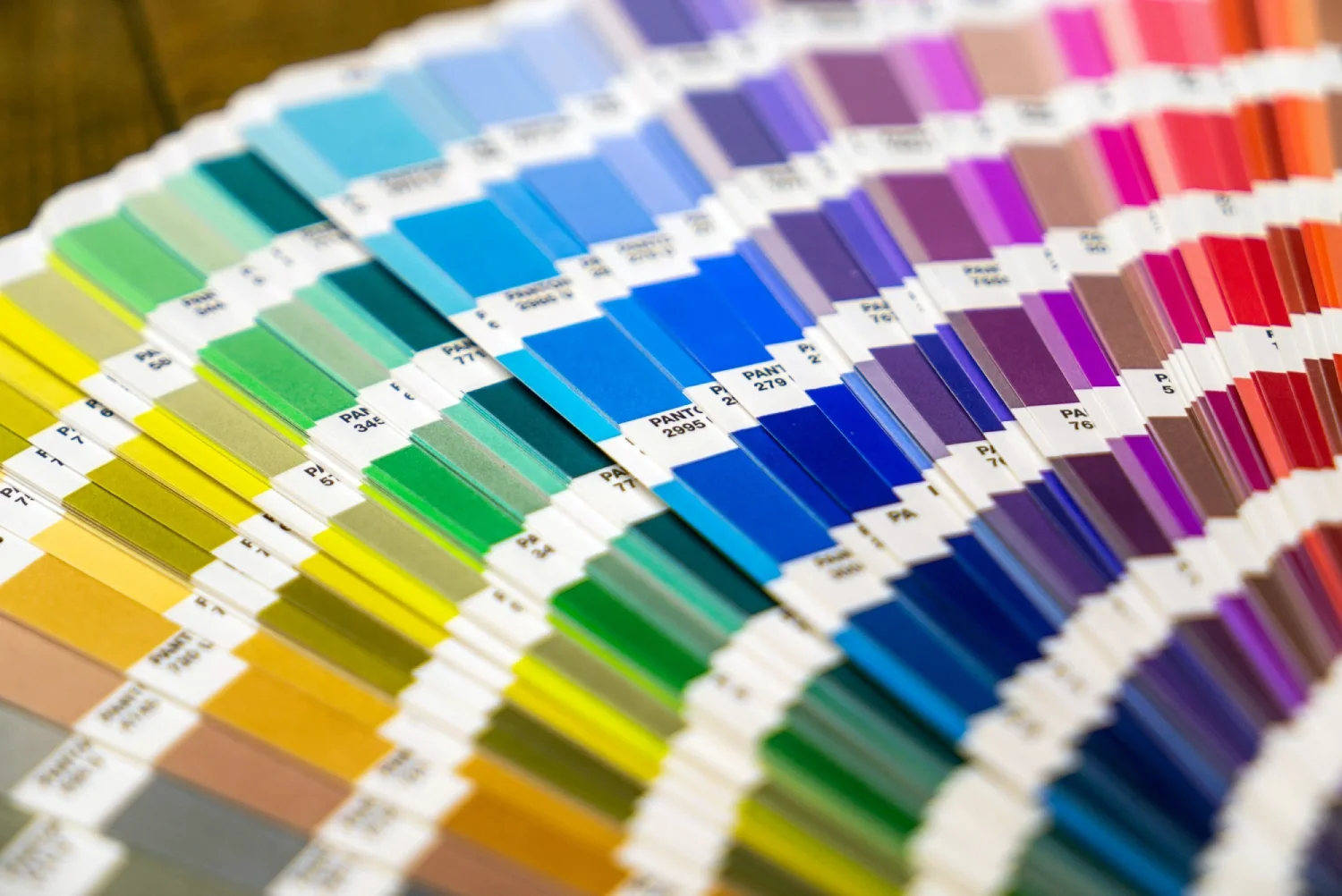
You must specify exact Pantone Matching System codes alongside digital RGB and web HEX codes during the initial design phase. Testing your palette across both color gamuts prevents the unpredictable color shifts that occur when converting digital designs onto physical signage.
Is it true that certain colors automatically increase conversion rates?
No color possesses an inherent, universal power to increase consumer conversion rates across all environments. Conversions are driven entirely by visual isolation and contextual contrast, meaning a color will only convert effectively if it completely contrasts with the surrounding layout elements.
How does generative AI affect the way businesses choose brand colors?
Generative AI tools consistently produce color palettes that reflect the statistical average of an industry’s historical data. This algorithmic repetition creates widespread visual homogenization, making custom, contrarian color selection an incredibly high-value strategy for business owners seeking true market differentiation.
What is the most common mistake small businesses make with color psychology?
The most common mistake is choosing corporate colors based entirely on personal aesthetic preferences or abstract emotional horoscopes. This inward-looking approach ignores the external competitive landscape, resulting in palettes that fail to establish distinct visual real estate in the local market.
When should a Dallas business owner choose a neutral primary color palette?
A neutral primary palette should only be selected if your direct competitors are locked in an aggressive war of high-saturation neon colors. In that rare market environment, adopting a ultra-clean monochromatic or slate identity can act as the ultimate pattern interrupter.
How do I audit my current brand colors to see if they need changing?
Compile your primary marketing assets and paste them directly onto a canvas alongside the homepages and vehicle wraps of your top five regional competitors. If your brand blends seamlessly into the collective group without standing out, your color strategy is actively draining your marketing returns.